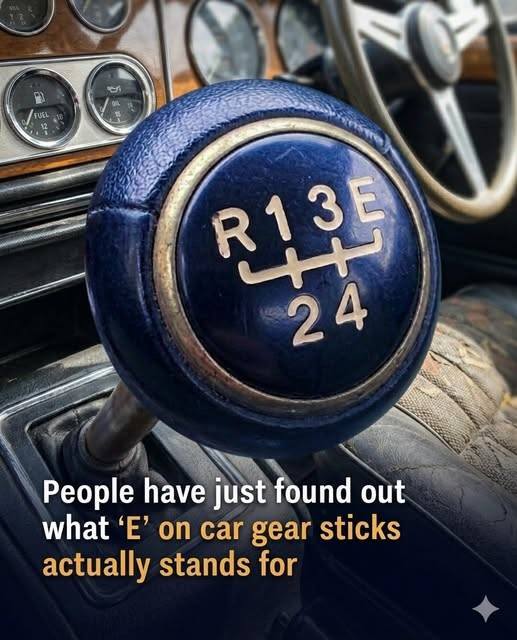
Today’s cars hide most of their intelligence behind software, sensors, and glowing touchscreens. Engines make thousands of tiny decisions every second without drivers ever noticing. Fuel efficiency, gear timing, throttle response, and energy management are now controlled silently by computers buried deep beneath polished dashboards. But decades ago, the relationship between driver and machine felt far more visible. Back then, a single mysterious letter sitting quietly beside P, R, N, and D on the gear selector could completely change the personality of a car.
That letter was “E.”
To many drivers, it looked cryptic at first. Some assumed it meant “extra.” Others thought it unlocked hidden power or some advanced driving feature they barely understood. But the truth was both simpler and more important. The “E” stood for “Economy” — a mode designed to help drivers save fuel during an era when gas prices, oil crises, and fuel anxiety were becoming impossible to ignore.
What made the feature fascinating was how physical the change felt.
Unlike modern vehicles, where fuel-saving systems often operate invisibly in the background, older cars made efficiency something drivers could actively choose. The moment someone shifted into “E,” the entire rhythm of the car subtly changed. The transmission shifted earlier into higher gears. The engine stayed calmer and quieter. Revolutions per minute dropped noticeably. Instead of aggressively chasing speed, the car encouraged restraint.
Drivers could feel it immediately through the steering wheel and accelerator pedal. Pressing the gas no longer produced the same eager surge forward. Acceleration became softer, smoother, and slower. The vehicle seemed to breathe differently, prioritizing conservation over excitement. It was as though the car itself had suddenly become more patient.
For many people, that tiny letter marked the first time a machine openly asked a philosophical question: do you want performance, or do you want efficiency?
That question became increasingly important during the fuel-conscious decades of the late twentieth century. Oil shortages and rising fuel costs forced automakers to rethink the relationship between power and practicality. Cars had long been symbols of freedom, speed, and horsepower, but suddenly economy mattered too. The “E” mode represented a small but meaningful cultural shift — an acknowledgment that drivers were beginning to care not just about how fast a car could go, but how responsibly it could travel.